
Suraj Bhat Laboratory
Gene activity, lens development and vision

Suraj Bhat, Ph.D.
Professor Emeritus
Department of Ophthalmology
Jules Stein Eye Institute
The Vision Molecular Biology Laboratory investigates the ocular lens (in the anterior) and the retinal pigment epithelium (RPE) in the posterior eye. Our current focus is on understanding (a) the role of the lens epithelium in maintaining a functional fiber mass of the ocular lens and (b) the role of exosome secretion in sustaining a functional RPE. These two epithelia are at the interface of systemic biology and tissue-specific physiology.
Research Focus Areas:
- Molecular characterization of the developing mouse lens at the single-cell level:
The ocular lens is characterized by a gradient of refractive index (RI), highest in the center and lowest at the periphery. We are investigating how gene activity connects to the phenotype (RI) by applying spatial transcriptomics to the mouse and the human eye.
- The molecular constitution of the visual axis:
The visual axis must remain functional for all life. We have demonstrated spatially driven, enhanced gene activity in nuclear fiber cells of the postnatal mouse lens. We aim to catalog all gene products and their possible contributions to the refractive index of the core/visual axis.
- Characterization of congenital cataracts at the molecular level:
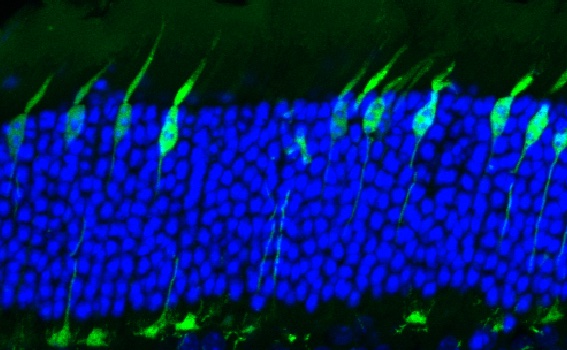
We have generated a mouse model of the most prevalent childhood cataract, the lamellar cataract. We plan on assessing gene expression patterns in human genetic/congenital cataracts to confirm the role of gene expression heterogeneity in pathogenesis.
- Molecular status of the aging human lens epithelium:
The anterior epithelium holds the metabolic keys for the health of the fiber cells by controlling nutrient circulation. We obtain central lens epithelial samples from cataract surgeries at Stein-UCLA, connecting with our investigations on the developing lens visual axis.
- Molecular communications in the retinal pigment epithelium (RPE):
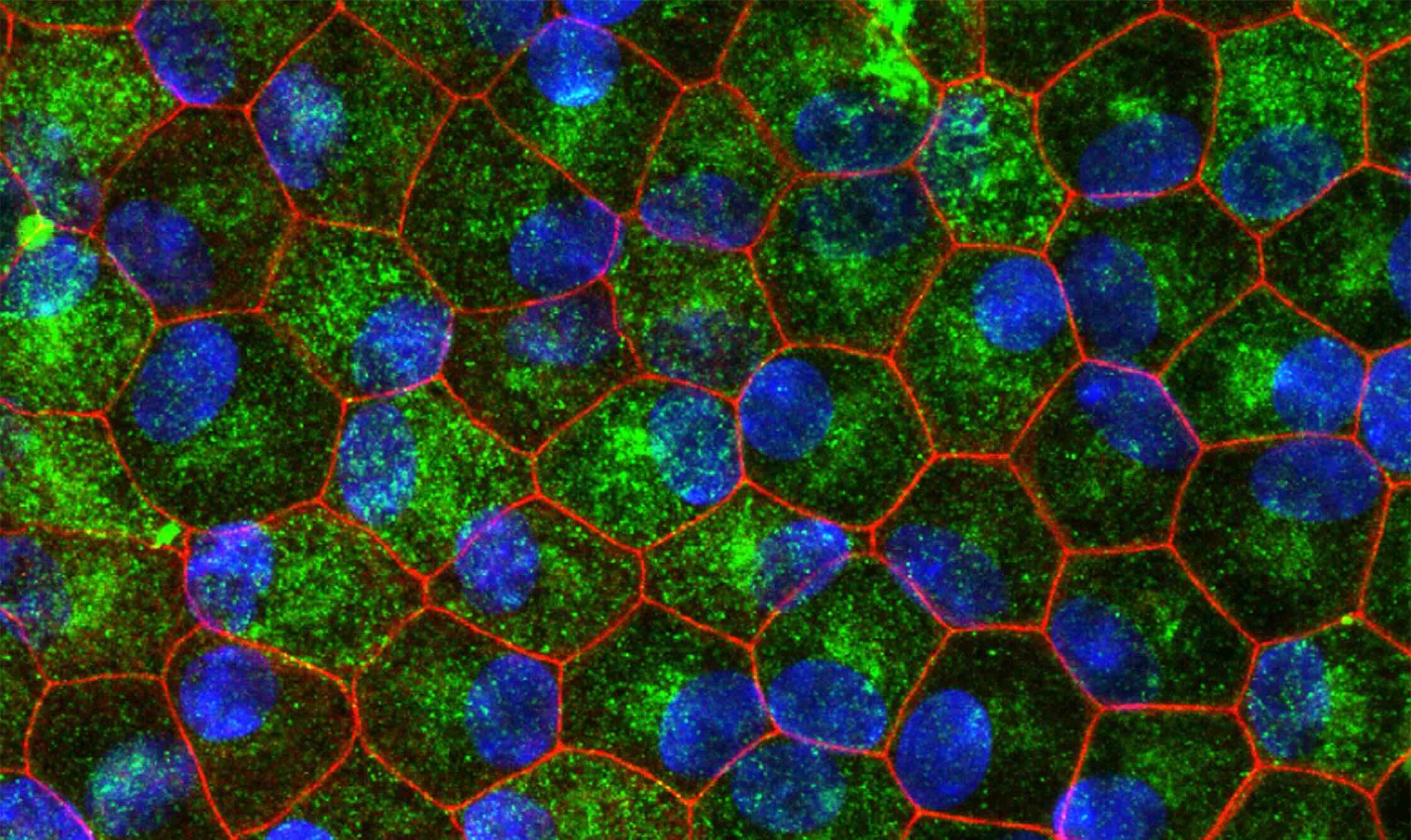
The health of photoreceptors depends on the underlying RPE. We find that the biogenesis of exosomes in the RPE depends on the active synthesis of αB-crystallin. We aim to apply spatial transcriptomics to investigate possible breakdown of the blood-retina barrier with age.
Selected Publications
Spatial Analysis of Single Fiber Cells of the Developing Ocular Lens Reveals Regulated Heterogeneity of Gene Expression
Gangalum R. K., Kim D., Kashyap R. K., Mangul S., Zhou X., Elashoff D., and Bhat S. P.
iScience (2018)
View PublicationTranscriptional profiling of single fiber cells in a transgenic paradigm of an inherited childhood cataract reveals absence of molecular heterogeneity
Bhat S. P., Gangalum R. K., Kim D., Mangul S., Kashyap R. K., Zhou X., and Elashoff D.
Journal of Biological Chemistry (2019)
View PublicationExpression of the HSF4 DNA binding domain-EGFP hybrid gene recreates early childhood lamellar cataract in transgenic mice
Gangalum R. K., Jing Z., Bhat A. M., Lee J., Nagaoka Y., Deng S. X., Jiang M., Bhat S. P.
Investigative Ophthalmology & Visual Science (2014)
View PublicationAlphaB-crystallin is found in detergent-resistant membrane microdomains and is secreted via exosomes from human retinal pigment epithelial cells
Gangalum R. K., Atanasov I. C., Zhou Z. H., and Bhat S. P.
Journal of Biological Chemistry (2011)
View PublicationInhibition of the Expression of the Small Heat Shock Protein alpha-Crystallin Inhibits Exosome Secretion in Human Retinal Pigment Epithelial Cells in Culture
Gangalum R. K., Bhat A. M., Kohan S. A., and Bhat S. P.
Journal of Biological Chemistry (2016)
View Publication