
Anthony J. Aldave Laboratory
Corneal Dystrophies and Gene Therapy

Anthony J. Aldave, M.D.
Professor and Vice Chair
Bartly J. Mondino M.D., Chair in Ophthalmology
Department of Ophthalmology
Jules Stein Eye Institute
aldave@jsei.ucla.eduFaculty Profile
Laboratory WebsiteORCID Profile
Research Areas
Molecular genetic basis of inherited disorders of the cornea, known as the corneal dystrophies
Description
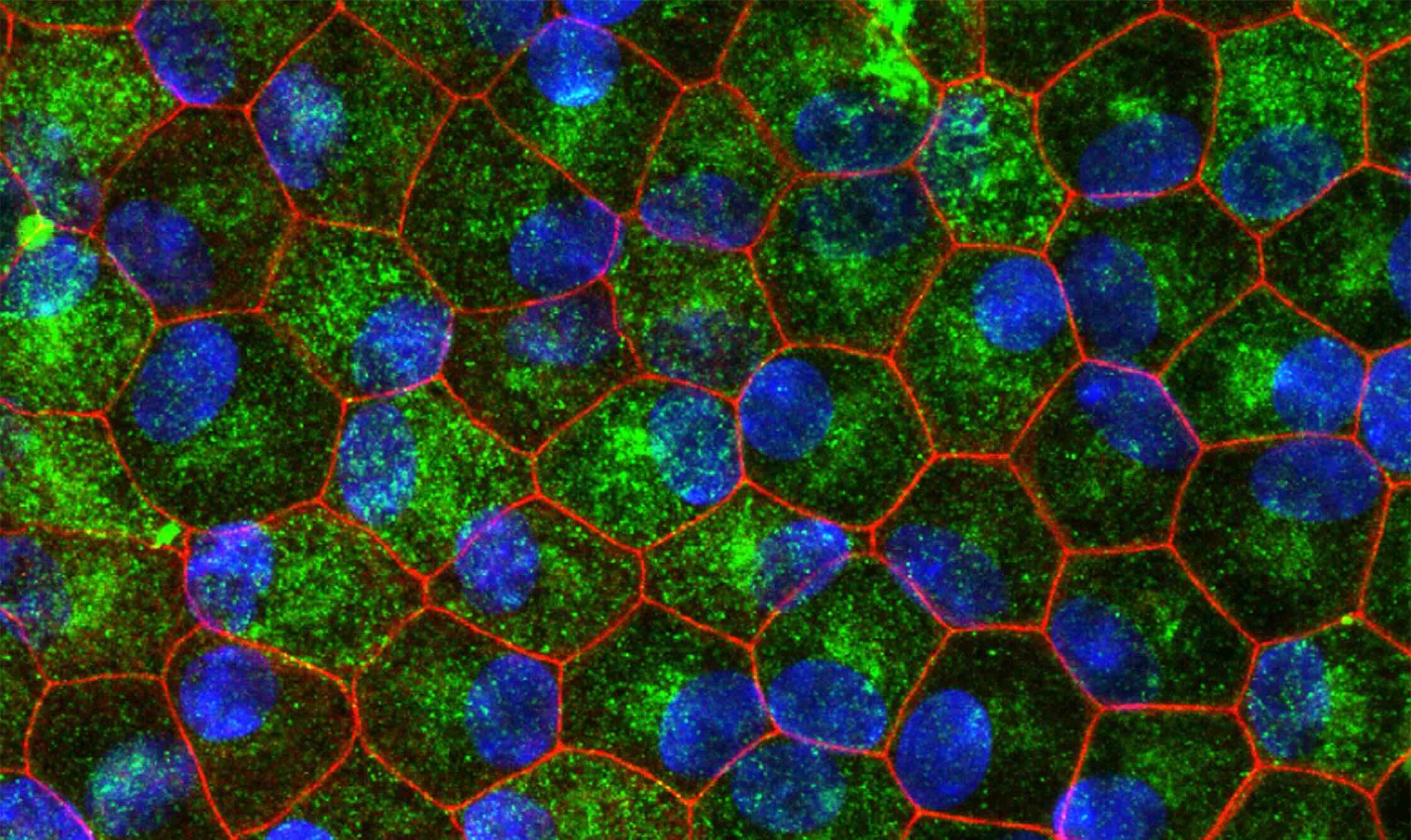
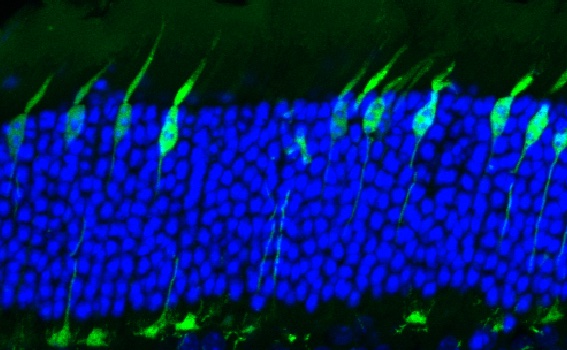
The Cornea Genetics Laboratory focuses on identifying and characterizing the molecular genetic basis of corneal dystrophies and elucidating the normal and disease biology of corneal endothelial cells.
The Laboratory employs an array of genetic analysis tools to identify causative mutations associated with inherited corneal disorders and utilizes mouse and cell-based disease models to study the pathomechanisms via which the identified mutations lead to loss of corneal clarity, and thus loss of vision. The identification and elucidation of the genetic basis of the corneal dystrophies has allowed Dr. Aldave and colleagues to develop and test molecular therapeutics approaches in these same cell-based and animal models. In 2023, the Laboratory was selected to participate in the Foundation for the NIH Accelerating Medicines Partnership® (AMP®) Bespoke Gene Therapy Consortium and received funding from the California Institute for Regeneration Medicine to perform preclinical studies of AAV gene therapy for congenital hereditary endothelial dystrophy.
The Laboratory is also involved in the characterization and optimization of ex vivo expansion of corneal endothelial cells, with the goal of transplanting the cells from one individual to multiple recipients. As it is estimated that worldwide only one donor cornea is available for every 70 that are needed, the use of expanded corneal endothelial cells to restore sight to individuals with corneal endothelial dysfunction, most commonly due to corneal endothelial dystrophies, will transform the current paradigm of one donor cornea restoring sight to only one recipient.
Recent Publications
Delayed Onset Infectious Crystalline Keratopathy After Corneal Cross-linking
Angela C. Chen, Sophie X. Deng, Anthony J. Aldave
Cornea (2026)
View PublicationOutcome of Cenegermin in the Treatment of Neurotrophic Keratopathy
Golshan Latifi, Piseth Dalin Chea, Saba Al-Hashimi, Seyed Reza Ghaffari, Anthony J. Aldave, Sophie X. Deng, Simon S. M. Fung
Cornea (2026)
View PublicationOutcomes of Descemet Stripping Endothelial Keratoplasty in Eyes With Anterior Chamber Intraocular Lenses
Reza Ghaffari, Alan W. Kong, Huong N. V. Duong, Sophie X. Deng, Anthony J. Aldave
Cornea (2026)
View PublicationKeratitis Fugax Hereditaria Associated With a Novel NLRP3 Mutation in a Non-Finnish Patient
Kavya Jatavallabhula, Onyinye Onyia, Doug D. Chung, Dominic Williams, Kaidi Wang, Anthony J. Aldave
Cornea (2024)
View PublicationInvestigation of the functional impact of CHED- and FECD4-associated SLC4A11 mutations in human corneal endothelial cells
Doug D. Chung, Angela C. Chen, Charlene H. Choo, Wenlin Zhang, Dominic Williams, Christopher G. Griffis, Paul Bonezzi, Kavya Jatavallabhula, Alapakkam P. Sampath, Anthony J. Aldave
PLOS ONE (2024)
View PublicationInfectious Crystalline Keratopathy Secondary to Mycobacterium chelonae
Clémence Bonnet, Alex C. Onishi, Anthony J. Aldave
Cornea (2023)
View PublicationProspective, Randomized, Multicenter, Double-Masked, Clinical Trial of Corneal Cross-Linking for Boston Keratoprosthesis Carrier Tissue
Sofia De Arrigunaga, Esen K. Akpek, Anthony J. Aldave, Shahzad I. Mian, David Zurakowski, Joseph B. Ciolino
American Journal of Ophthalmology (2023)
View PublicationFungal Infection After Descemet Membrane Endothelial Keratoplasty: Incidence and Outcomes
Brittany M. Wong, Clémence Bonnet, Reza Ghaffari, Kourtney Houser, Jennifer DeMatteo, Nicola Lau, Anthony J. Aldave
Cornea (2023)
View PublicationNovel DCN Mutation in Armenian Family With Congenital Stromal Corneal Dystrophy
Dominic Williams, Doug D. Chung, Anna Hovakimyan, Araks Davtyan, Ben J. Glasgow, Anthony J. Aldave
Cornea (2023)
View Publication